
Galvanizing
/ Service Details
What is Galvanizing?
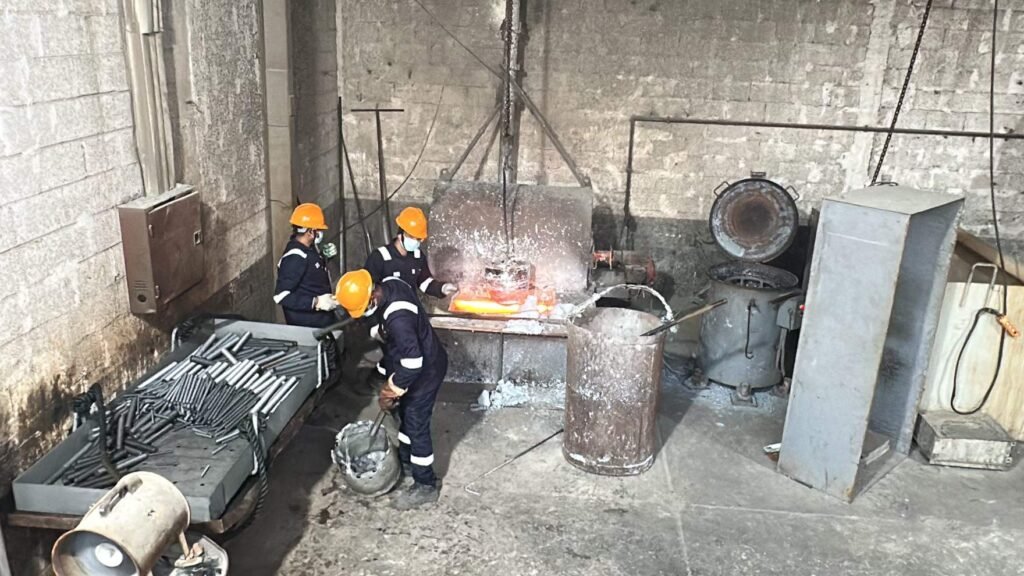
Steps in the Hot-Dip Galvanizing Process with Centrifuging
>> INSPECTION AND PREPARATION
Incoming steel is visually inspected for paint, grease, rust and other contaminants. Hollow or closed sections are fitted with vent and drain holes so air can escape and molten zinc can flow freely during dipping — preventing distortion, bursting and unnecessary zinc wastage.
>> Degreasing & Acid Pickling
The steel is immersed in hydrochloric acid to strip away oil, grease, rust and mill scale. Clean, bare steel is essential for the zinc to bond properly.
>> RINSING
The material is rinsed in water to remove residual acid, preventing contamination of the later baths.
>> Fluxing
The cleaned steel is dipped in a flux (ammonium chloride) solution, which removes any remaining oxides and protects the surface from re-oxidising before it reaches the zinc bath, ensuring a clean metallurgical bond.
>> DRYING
The material is pre-heated and dried above the furnace to remove all moisture. This is a critical safety step — wet material entering molten zinc causes dangerous splashing.
>> HOT DIP GALVANIZING
The steel is submerged in molten zinc at around 450°C (842°F) for 3–4 minutes, depending on size and thickness. The zinc reacts with the iron to form tough, metallurgically-bonded zinc-iron alloy layers.
>> CENTRIFUGING
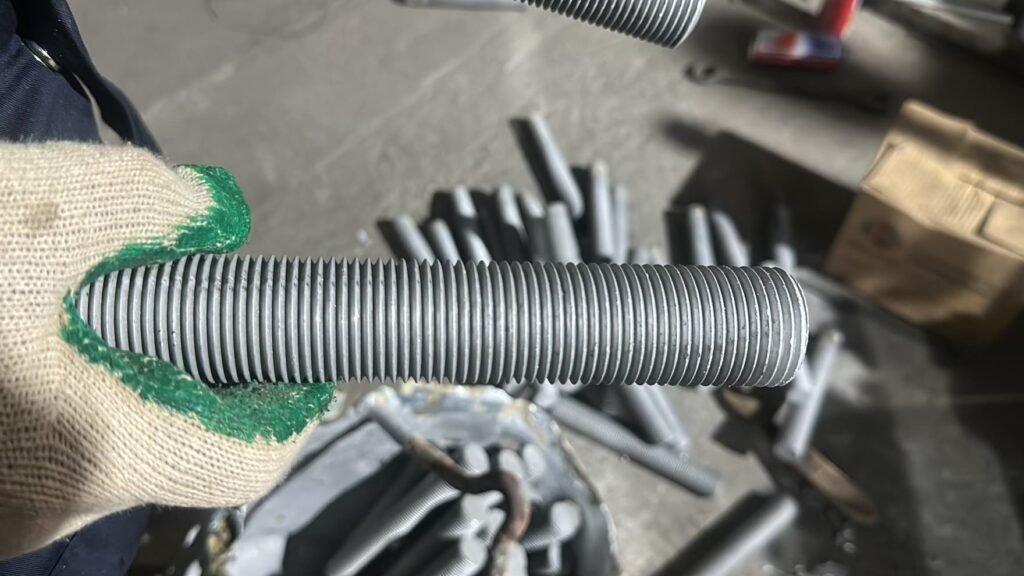
Small and threaded items such as fasteners and fittings are immediately spun in a centrifuge to fling off excess molten zinc, leaving clean threads and a thin, uniform coating.
>> PASSIVATION
In cold or humid places, freshly galvanized steel is given a special protective coating to guard against white rust — a powdery white stain that can appear when newly galvanized parts are stored or shipped in damp, poorly ventilated conditions. In Saudi Arabia's hot, dry climate this is rarely a problem, so passivation is generally not needed and is not routinely done here; it can be applied when material is being sent to colder or more humid regions.
>> FINISHING AND INSPECTION
Threads are cleaned, and any lumps or spikes are removed by grinding. The material is then given a final visual inspection against the required ASTM specification before dispatch.
Benefits of Hot-Dip Galvanizing with Centrifuging
>> Removal of excess zinc coating
Centrifuging can help get the excess zinc to be removed while centrifuging it through the centrifuging machine.
>> More uniform coating
Centrifuging can also help to produce a more uniform zinc coating. This can improve the appearance of the finished product and also provide better corrosion protection.
>> Reduced waste
Centrifuging can help reduce the amount of waste zinc that is generated during the galvanizing process. This can be beneficial for both environmental and economic reasons.
Applications of Hot-Dip Galvanizing
Hot-dip galvanizing is used in a variety of applications, including: